
- when
- February 3, 2024 - February 25, 2024
- where
- EXbunker
About the work, Fiona says:
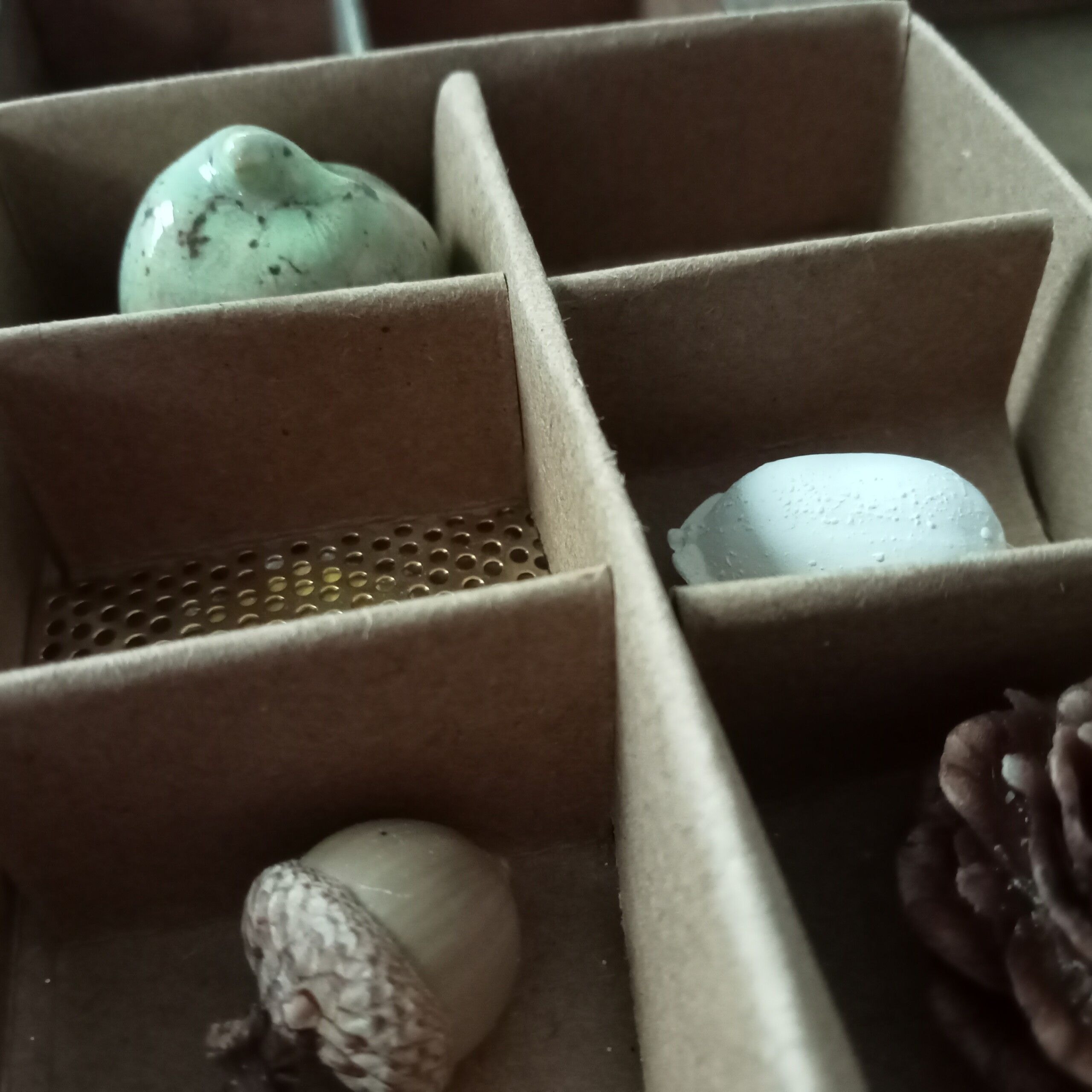
We poke our heads outdoors, wrap up warm against the winter blasts and hurry as fast as possible through the cold wet streets to our next destination. Yet… underfoot there is a parallel world of little broken bits and bobs, traces of our individual and collective stories. Objects that are sometimes in plain sight, sometimes hidden away, elusively peeping out from under a leaf.
They whisper, giggle or call out. Gingerly I pick the little rusty wingnut out of the gutter and balance it in the palm of my hand, lifting it up to my eyes before I slip it into my pocket, where it joins other foundlings of the day: a small piece of frayed rope and a lost marble. Do kids still play with marbles? I thought they were long forgotten, almost exctinct.
And now, here…. My found objects come together, some from other times, years, places…. Together we build another world with their forgotten and imagined pasts, flashes of stories forming and disappearing as I arrange my little foundlings, leading them off to their new adventures. Letting them become their own entities, chattering, playing, hiding in corners or comfortably sitting in their own new little box. New lives and past lives cross, mingle, tell new stories of imagined memories.