
exhibitions|

The House of Self

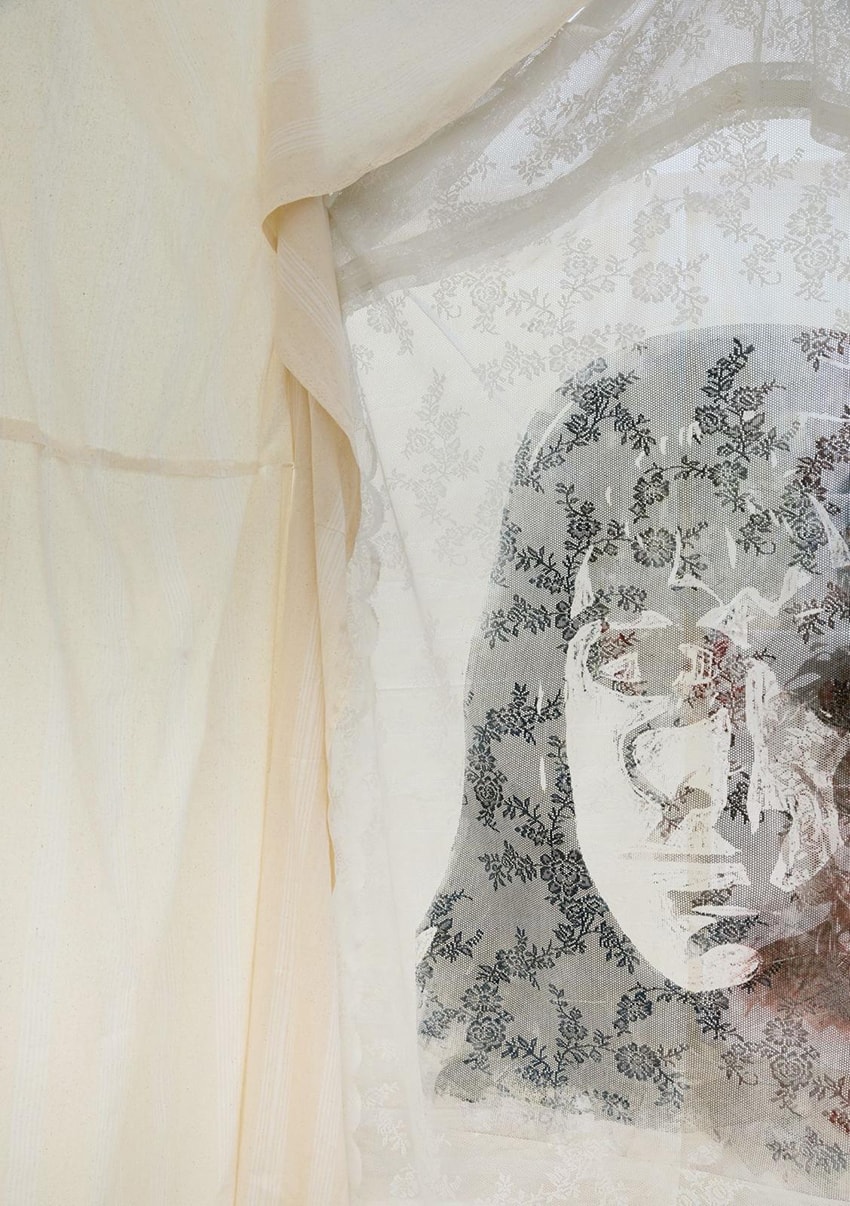
A woman's face is visible through a sheer white lace veil with dark floral motifs, framed by cream-colored curtains.
EXboot logo
when
January 2, 2026 - January 31, 2026
where
EXboot

Where do I belong, and what truly shapes our sense of self? Inês Da Silva Aguiar explores the fragile and complex nature of identity in The House of Self, a work influenced by her ethnically mixed background and upbringing on a politically divided island. Through personal reflection and conversations with her family, she reveals the challenges of navigating languages and cultures, and captures the experience of living between different worlds.

The foundation of her installation is composed of textiles from her heritage, creating a tangible, domestic atmosphere that evokes both comfort and memories. As a visitor, you can physically enter the house, where Da Silva Aguiar presents herself and her family using passport photos. She combines images from different stages of life to explore how identity changes over time. These portraits reveal the tension between personal identity and the external labels imposed by authorities.

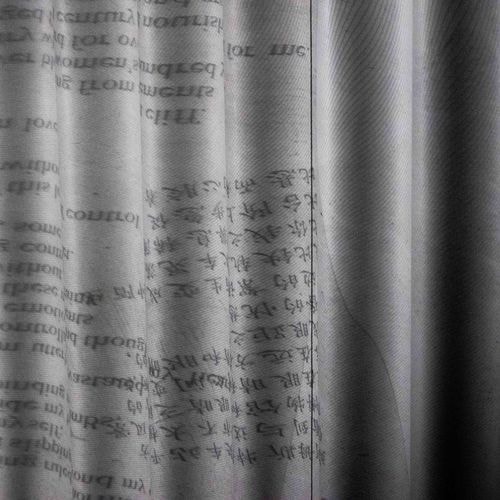
Embroidered quotes from her and her family, written in English, Turkish, and Portuguese, adorn the exterior of the house and reflect on identity, the loss of a sense of belonging, and the way language fades and distorts over time. While the texts remain legible from the outside, the embroideries inside become fragmented, reflecting the gradual disappearance of language and the complex nature of identity in today's globalized and nuanced world.
Plan a visit

Current exhibition

This exhibition is closed. This is showing at EXboot now:

Numerous small, colorful buttons of different sizes and shades are scattered over a light-colored, textured surface.
EXboot logo

Apr 2

Apr 26

De Unbuttoning

Judith Spil

Suddenly, something falls to the ground: what could it be? Something that was previously hidden has just become visible through the falling of a button. Judith Spil explores how vulnerability can be made visual. In this work, she uses buttons. Everyday objects often appear in her work. The falling buttons detach from the canvas and form a continuously changing landscape on the floor.The buttons are connected to a thread that is slowly being pulled, and inevitably another button will fall. This happens slowly, just like when you share vulnerable parts of your life. You reveal parts of yourself, bit by bit. It's an irreversible process: once you share something with someone, you can't go back. It might strengthen your bond, but it also feels like something is falling away. A protective layer is missing; something is now being exposed. It's a beautiful, yet painful process in which you give away a part of yourself, which could connect you with other people. You take a risk by doing this, because you never know how others will react to your fragility.

where

Nijverheidskade 15
3534AZ Utrecht

Due to the unique and limited size of the cultural-historical site, EXboot is only accessible on foot and is not wheelchair accessible. There are no facilities for the hearing impaired (yet).

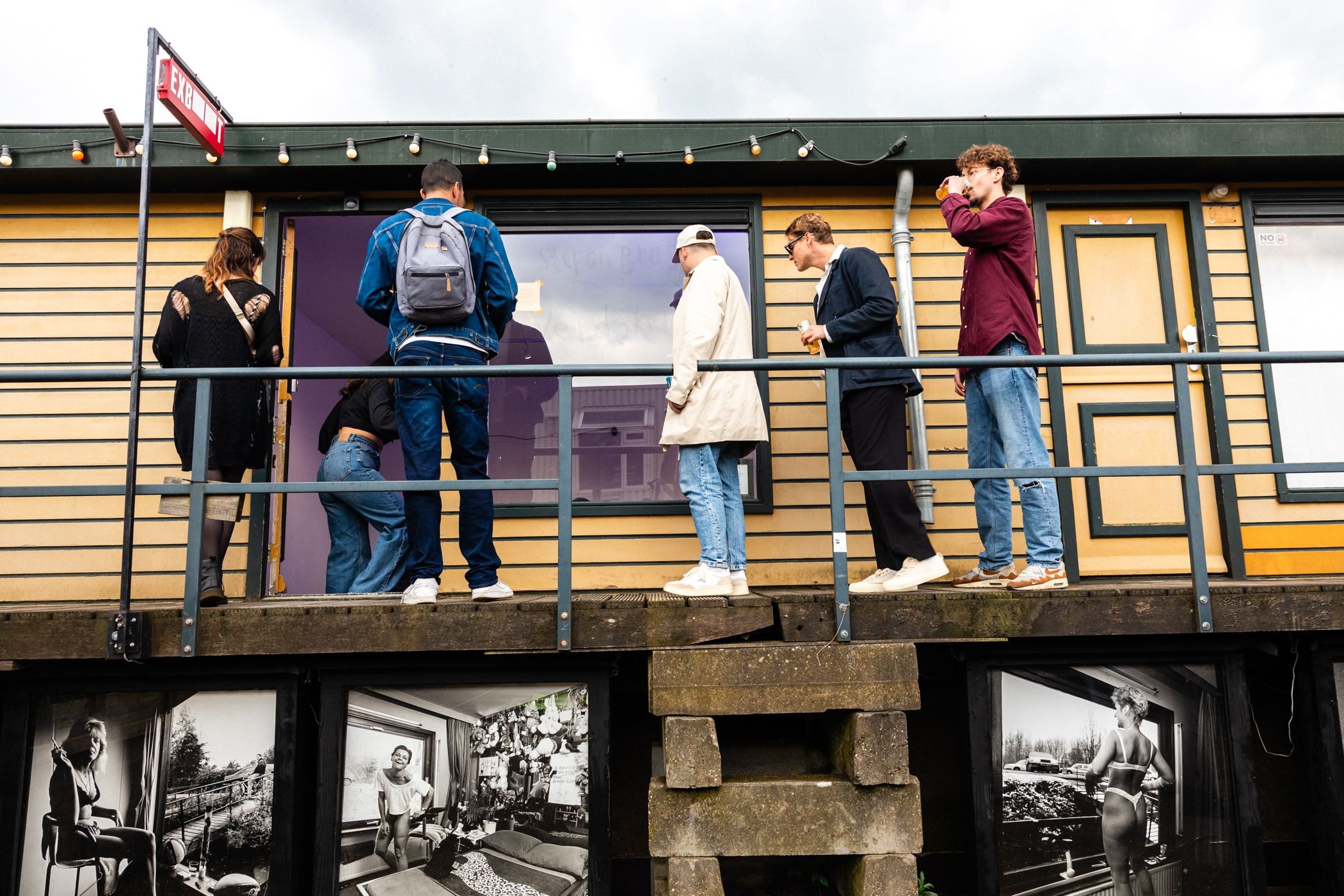
Een groep jonge mannen kijkt door het raam van de EXboot naar binnen

Always at EXboot

The sand path museum

I cherish both my present and my past. Besides a space for high-profile art, one of my rooms also houses the Zandpad Museum. Here, I'll tell you about my illustrious past and introduce you to people who know me well—inside or out. Sit on my stool, gaze out the window, and listen to the many stories surrounding my life.

Short documentary 'The Sand Path'

The Zandpad Museum is screening a short documentary about the history of the Zandpad. You'll also find numerous audio clips of conversations with various people involved, including a former sex worker and former mayor Aleid Wolfsen.

This Zandpad documentary was made by Sylvie Kamphuis & Jaap Pronk (director), Bram Engelaar (camera), Doenja Abel (production), Twan Bracco Gartner (music), and Bald Beeld (editing). Thanks to the interviewees: Aleid Wolfsen (former mayor of the Municipality of Utrecht), Brenda Oude Breuil (criminologist at Utrecht University), Jannie Teunissen (De Tussenvoorziening), the former sex worker, and the former client of Zandpad. The documentary was made possible in part by the Municipality of Utrecht, KF Heinfonds, Mondriaanfonds, and RTV Utrecht.

All about EXboot